Culture Prediction Markets: How to Trade Reality TV, Awards & More
Explore how culture prediction markets work, from reality TV winners and entertainment awards to movie releases, music charts, and celebrity milestones.
From Dancing With the Stars and the Oscars to blockbuster movies and celebrity milestones, culture prediction markets let traders take positions on some of entertainment's biggest questions.
These markets turn pop culture into tradable contracts, with prices reflecting the likelihood of particular outcomes. Some follow familiar competitions, while others track movie revenue, music charts, release dates, and even unusual cultural events.
Here's how culture prediction markets work, what you can trade, and what to know before getting started.
Key Takeaways
- Culture prediction markets cover reality TV, awards shows, movies, music, video games, celebrity news, and other entertainment events.
- Contracts trade at prices that reflect market-implied probabilities, with winning Yes contracts generally paying $1 at settlement.
- Reality TV and awards markets focus heavily on winners and nominations, while entertainment contracts can involve revenue, rankings, scores, and deadlines.
- Kalshi, Polymarket US, and other platforms offer culture contracts, but available markets and trading activity differ.
- Each contract has specific resolution criteria, making the official rules important reading before placing a trade.
What Are Culture Prediction Markets?
Culture prediction markets are exchanges where people trade contracts based on the outcomes of entertainment and pop-culture events.
Instead of simply following a television competition or speculating about an upcoming movie, traders can buy and sell contracts tied to specific questions, such as:
- Who will win Dancing With the Stars?
- Which movie will win Best Picture?
- When will Grand Theft Auto VI be released?
The category also extends beyond traditional entertainment competitions. Contracts may track box-office performance, music rankings, celebrity announcements, and other measurable cultural milestones.
Traders express their expectations by buying and selling contracts, with prices evolving as new information emerges.
How Do Culture Prediction Markets Work?
Culture prediction markets are based on event contracts that settle according to whether a specified outcome occurs.
Suppose a contract asks whether a particular contestant will win Dancing With the Stars. If Yes contracts trade at 65 cents, the market is implying roughly a 65% probability of that outcome.
A trader buying 10 Yes contracts at 65 cents would pay $6.50 before fees. If the contestant wins and each contract settles at $1, the payout would be $10, producing a $3.50 profit before fees. If the contestant loses, those Yes contracts would expire worthless.
Prices can change throughout the competition. Traders may also sell their positions before settlement, provided there is sufficient liquidity and a buyer at an acceptable price.
Not every culture market asks a simple winner question. Some involve multiple potential outcomes, while others track whether a numerical threshold is reached or an event happens before a deadline.
For a broader explanation of contract pricing, payouts, and trading mechanics, see our guide to how prediction markets work.
What Can You Trade in Culture Prediction Markets?
Culture markets cover everything from major television competitions and entertainment awards to movie releases, music charts, and celebrity milestones.
The contracts themselves vary. Some ask who will win, others whether a specific event will happen, and there are those that revolve around whether a measurable result will exceed a predetermined threshold.
Reality TV Prediction Markets
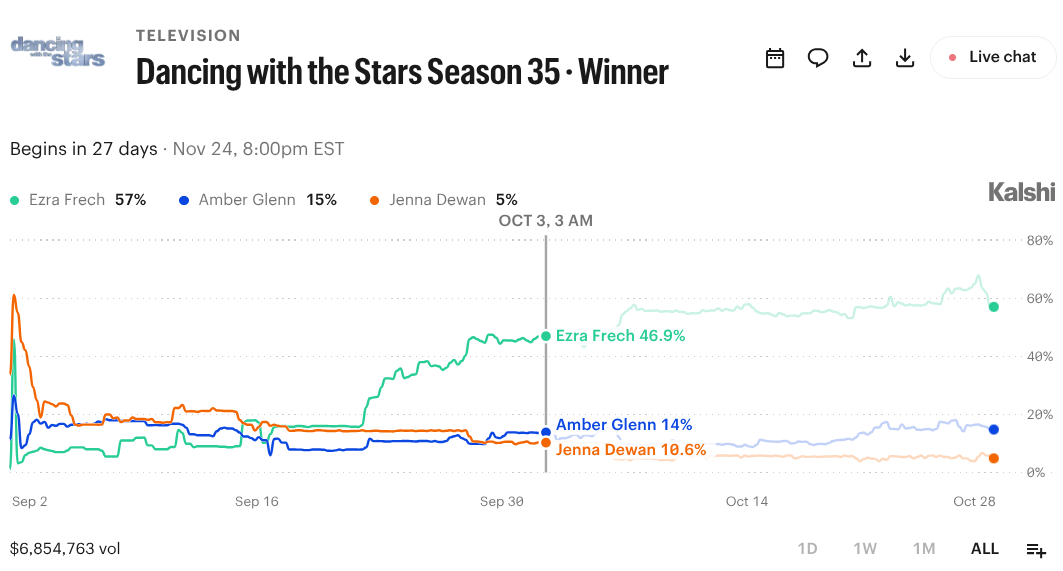
Reality television is a natural fit for prediction markets because many shows feature competitive formats, recurring eliminations, and clearly defined winners.
Dancing With the Stars is one of the most recognizable examples. Traders can take positions on which contestant will win the season, with prices responding to performances, judges' scores, audience voting, and eliminations.
These markets can develop over several months. A contestant who begins the season as an outsider may gain support after a standout performance, while an early favorite can lose ground following disappointing results.
The distinction between judges' scores and audience voting is particularly important. A contestant can perform well with judges without necessarily commanding enough public support to win.
Other reality competitions, including Survivor, Big Brother, American Idol, Love Island, and America's Got Talent, provide similar opportunities for winner and elimination contracts when listed.
Some markets also focus on shorter-term outcomes, such as who will be eliminated during a particular episode or which contestants will reach the finale.
Our Dancing With the Stars prediction market coverage provides an example of how traders evaluate a competitive entertainment field.
Awards Show Prediction Markets
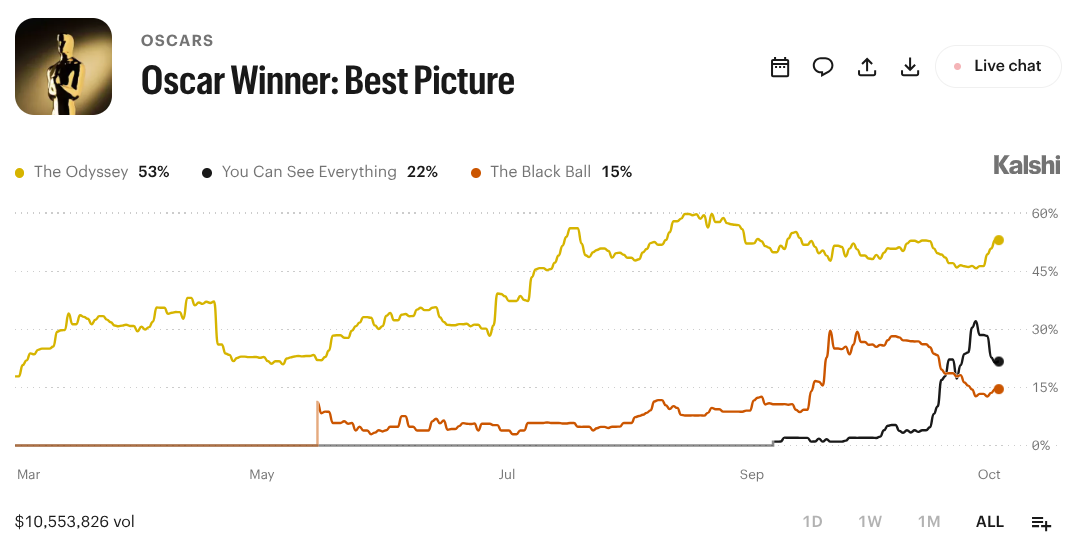
Major entertainment awards are another prominent part of culture prediction markets.
The Academy Awards are a leading example, with contracts covering categories such as Best Picture, Best Actor, and Best Actress. Similar markets may follow the Grammys, Emmys, Golden Globes, and other ceremonies.
Traders can take positions on eventual winners, and some contracts focus on which films, performers, or artists will receive nominations.
Awards markets have their own information cycle. Early critical reception and industry buzz can establish favorites, but nominations, precursor awards, publicity campaigns, and changing perceptions can reshape the field.
For example, a film may lead the Best Picture market early in awards season, only to face stronger competition after another movie performs well at major industry ceremonies.
The voting process also matters. Awards determined by industry members may behave differently from fan-voted competitions, where public enthusiasm plays a more direct role.
Our Oscar Best Picture prediction market analysis illustrates how an awards race translates into market probabilities.
Entertainment Prediction Markets
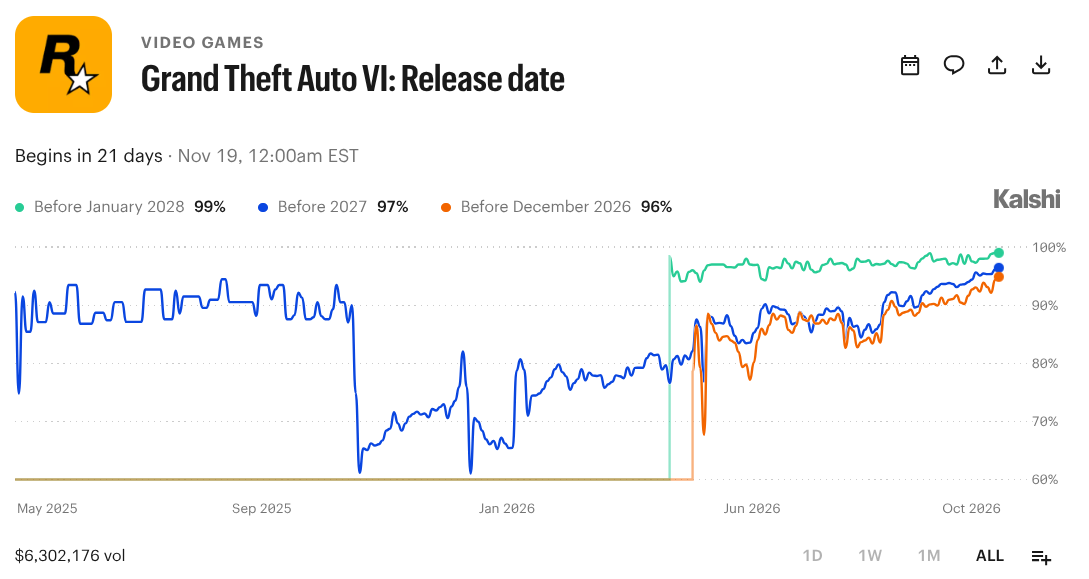
Entertainment markets extend beyond competitions and awards, covering measurable outcomes across movies, music, video games, and other areas of popular culture.
- Movies and box office: Traders may speculate on whether a film will exceed a particular opening-weekend revenue figure, achieve a specified Rotten Tomatoes score, or become the highest-grossing release over a defined period. These contracts depend on different indicators. Ticket presales and box-office tracking may influence revenue markets, while early reviews and critic reactions can affect review-score contracts.
- Music: Contracts can track Billboard chart positions, album rankings, streaming milestones, and other music-industry outcomes. A market might ask whether an artist will reach No. 1 or whether a song will exceed a specified performance threshold. The precise chart, reporting period, and measurement criteria determine what counts.
- Video games: Major gaming releases create another category of entertainment markets. Contracts can follow launch deadlines, review scores, awards, and other milestones. Grand Theft Auto VI is a particularly recognizable example because release timing is a measurable outcome that can change with publisher announcements and development schedules. Our GTA VI release-date prediction market coverage explores how traders price that uncertainty.
Culture markets also venture into less conventional territory. Kalshi's category includes areas such as collectibles and food, illustrating how broadly exchanges can define cultural events.
Not every niche market attracts significant activity, but the variety of contracts help distinguish culture prediction markets from traditional entertainment wagering.
Celebrity Prediction Markets
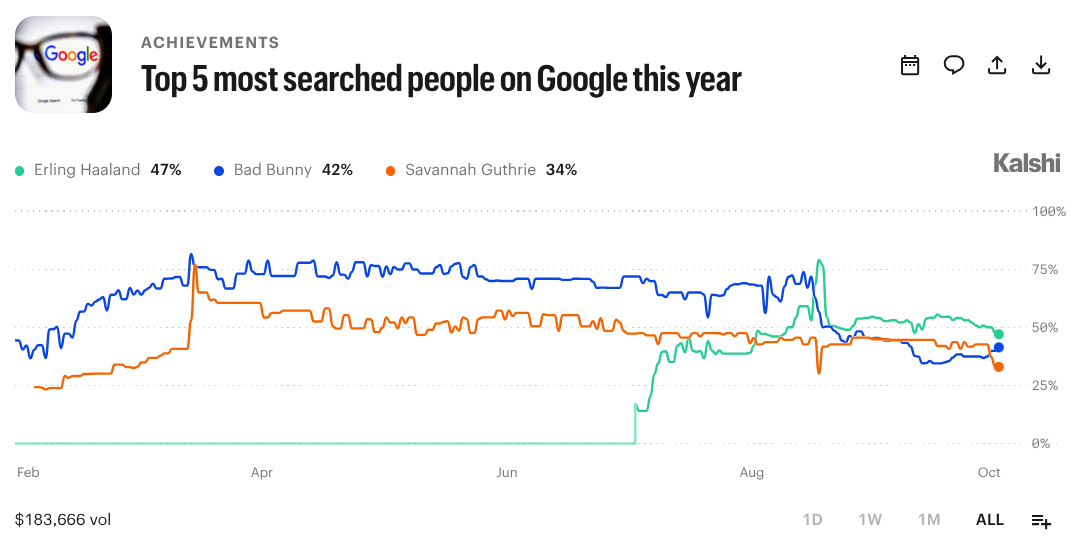
Celebrity prediction markets focus on developments involving prominent entertainers, public figures, and online personalities.
Contracts may cover engagements, marriages, public appearances, casting decisions, and other personal or professional milestones.
Unlike a television competition with scheduled episodes and a known finale, celebrity events can unfold unpredictably. A public statement, credible news report, or official announcement may change expectations quickly.
The distinction between speculation and confirmation is particularly important. A widely circulated rumor may influence trading prices without satisfying the conditions required for a contract to settle.
Celebrity markets can also have thinner trading activity than major awards or reality television competitions, making liquidity and available prices especially important.
What Moves Culture Prediction Market Prices?
Culture prediction market prices respond to new information, shifting expectations, and trading activity. Several factors are particularly influential:
- Performances and results: Strong reality TV performances, unexpected eliminations, awards nominations, and precursor-award victories can change perceptions of who is most likely to win.
- Measurable entertainment data: Ticket presales, box-office projections, critic reviews, chart rankings, and streaming figures can affect contracts tied to numerical outcomes.
- Announcements and developments: Release delays, casting news, celebrity statements, and eligibility changes may significantly alter the likelihood of an event.
- Audience sentiment: Fan support, social-media activity, and publicity can influence expectations, especially in competitions involving public voting.
Market activity itself also matters. Prices reflect the trades taking place, not a definitive assessment of the outcome.
A contract with limited liquidity may experience a substantial price movement on relatively modest trading activity, while a heavily traded market may absorb new information more gradually.
How Do Culture Prediction Markets Settle?
Culture prediction markets settle according to the resolution criteria published for each contract.
A Dancing With the Stars winner contract, for example, generally depends on the contestant officially declared the season's winner. A Rotten Tomatoes contract may instead depend on whether a movie's score exceeds a specified threshold at a particular date and time.
Other contracts use official awards announcements, music charts, box-office figures, or designated reporting sources.
Some outcomes are straightforward, while others involve additional conditions or contingencies. Platforms publish the applicable resolution rules, and traders are responsible for reviewing those rules before entering a position.
The important question isn't simply what appears to have happened, but whether the event satisfies the contract's precise terms.
Where Can You Trade Culture Prediction Markets?
Kalshi and Polymarket are two prominent names in culture prediction markets, although their platforms and available contracts differ.
- Kalshi operates a federally regulated prediction market exchange with a dedicated Culture category. Its listings cover reality television, entertainment awards, movies, music, video games, and additional cultural subjects. Contracts range from competition winners to numerical milestones and release deadlines.
- Polymarket operates separate US and international platforms. Polymarket International serves eligible users outside the United States, while Polymarket US is a distinct domestic exchange with its own market listings and eligibility requirements. The two catalogs should not be treated as interchangeable.
For American readers, Polymarket US Culture is the relevant starting point. Its offerings include reality television competitions, entertainment awards, movies, music, and other pop-culture outcomes, although individual contracts and trading activity may differ from the international platform.
Other prediction market platforms may also offer selected entertainment contracts. Readers comparing exchanges, available markets, and platform features can consult our guide to the best prediction market platforms.
Are Culture Prediction Markets Legal?
Culture prediction markets operate within a developing U.S. regulatory framework.
Kalshi and Polymarket US operate through exchanges regulated by the Commodity Futures Trading Commission (CFTC), which oversees designated contract markets under federal commodities law.
These event contracts are distinct from betting offered by state-regulated sportsbooks. However, federal oversight does not mean that every prediction market contract is automatically available or legally uncontested in every state.
Regulatory disputes involving prediction markets continue to develop, particularly around the relationship between federal derivatives regulation and state gambling laws.
Whether someone can trade a particular culture contract depends on the platform, applicable jurisdiction, and the exchange's eligibility and market restrictions.
Trading Culture Prediction Markets
Culture prediction markets can be appealing because the underlying events are familiar. But recognizing the television show, movie, or celebrity involved is only part of evaluating a contract.
- Traders should consider the available prices, bid-ask spread, fees, liquidity, and the precise conditions required for settlement. A market may appear to offer an attractive probability while providing limited opportunities to enter or exit at that price.
- The type of event also matters. A reality TV competition unfolds through scheduled performances and eliminations, while a box-office contract depends on reported financial results. Celebrity milestones may hinge on a single unexpected announcement.
Ultimately, culture prediction markets translate uncertainty surrounding entertainment events into tradable probabilities. The most useful starting point is understanding exactly what a contract measures, how its price is determined, and what must happen for it to pay out.
Culture Prediction Markets FAQs
What should you look for before trading a culture prediction market?
Start with the contract's resolution criteria, trading deadline, and designated outcome sources. Then review the current Yes and No prices, available liquidity, bid-ask spread, and applicable fees. These details determine both what you're trading and the potential cost of entering or exiting a position.
Can you trade culture prediction markets while an event is happening?
Sometimes. Certain contracts may remain available during live television broadcasts, awards ceremonies, or other events, while others close beforehand. Exchanges can also suspend trading under their rules. Check the specific contract's trading schedule rather than assuming a market will remain open until the event ends.
How are disputed or unclear culture prediction market outcomes resolved?
Platforms use the contract's published resolution criteria, designated information sources, and applicable review procedures. If an outcome is ambiguous or disputed, the exchange determines settlement according to those rules. The process can differ depending on the contract and the nature of the dispute.
What happens if a culture prediction market is postponed or canceled?
It depends on the contract. For example, Kalshi's reality competition winner rules provide for a No outcome when a competition concludes without an official winner, while a postponed finale can still determine settlement if a winner is subsequently announced within the applicable conditions. Other contracts may have different provisions, so a postponement or cancellation does not automatically guarantee a refund.
What should you monitor after trading a culture prediction market?
Follow developments directly relevant to the outcome, such as competition results, official announcements, awards voting indicators, box-office reports, or release schedules. Also monitor the contract's price, liquidity, and approaching deadlines. New information can change the value of an open position well before the final result is known.