Fed December Rate Decision: Prediction Market Prices & Forecast
Kalshi traders are pricing another Federal Reserve rate hike in December, just one day after policymakers voted to hold rates steady. Prediction markets reveal expectations for the next decision, the resulting interest rate, and the outlook through 2027.
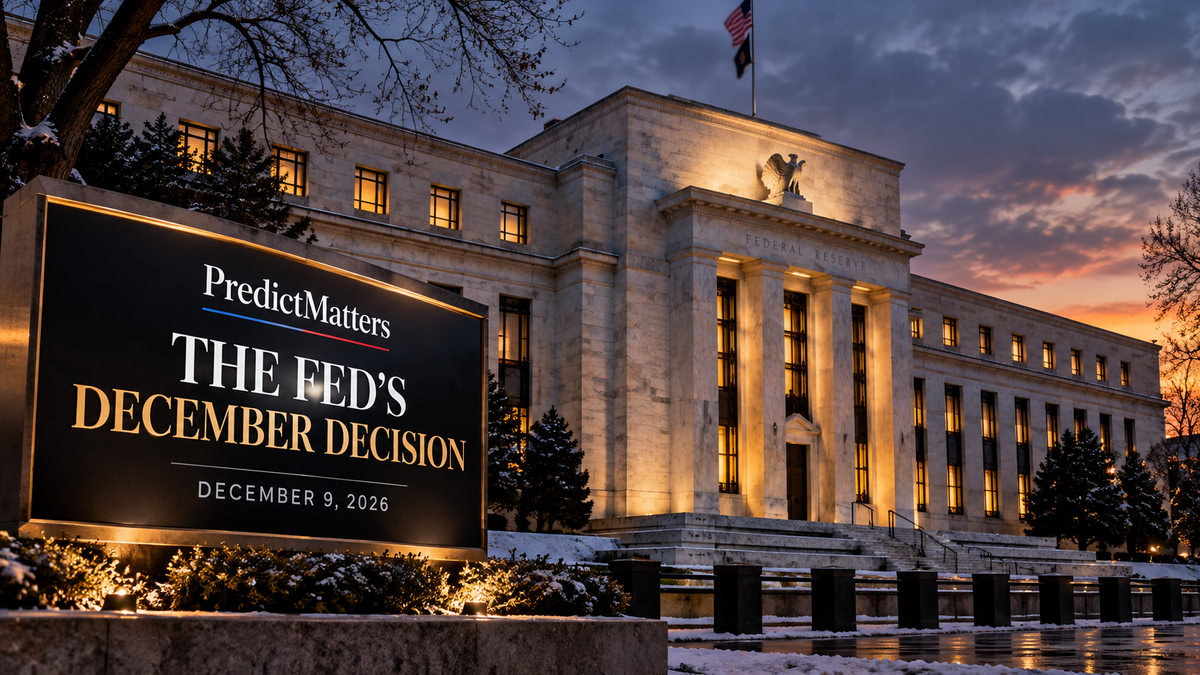
The Federal Reserve left interest rates unchanged on October 28, but prediction markets suggest the pause may be short-lived.
The Fed held its benchmark target range at 3.75%-4.00%, following a quarter-point increase in September. The October decision passed 10–2, with two officials dissenting in favor of another hike.
That disagreement comes as the central bank confronts persistent inflation alongside an economy it now describes as expanding at a strong pace. Policymakers have another six weeks to assess incoming data before their final scheduled meeting of 2026.
On Kalshi, traders are pricing a 78% chance of a 25-basis-point increase in December. Two related markets offer additional insight into where interest rates could land after the meeting and how the outlook extends into 2027.
Market Snapshot
- Next Fed decision: December 9, 2026
- Current federal funds target range: 3.75%–4.00%
- 25-basis-point hike: 78%
- Rates unchanged: 20%
- Hike greater than 25 basis points: 4%
- December rate forecast: 4.23%
- Headline market trading volume: $2.73 million
Kalshi market prices and volume as of October 29, 2026.
Will the Fed Raise Interest Rates in December?
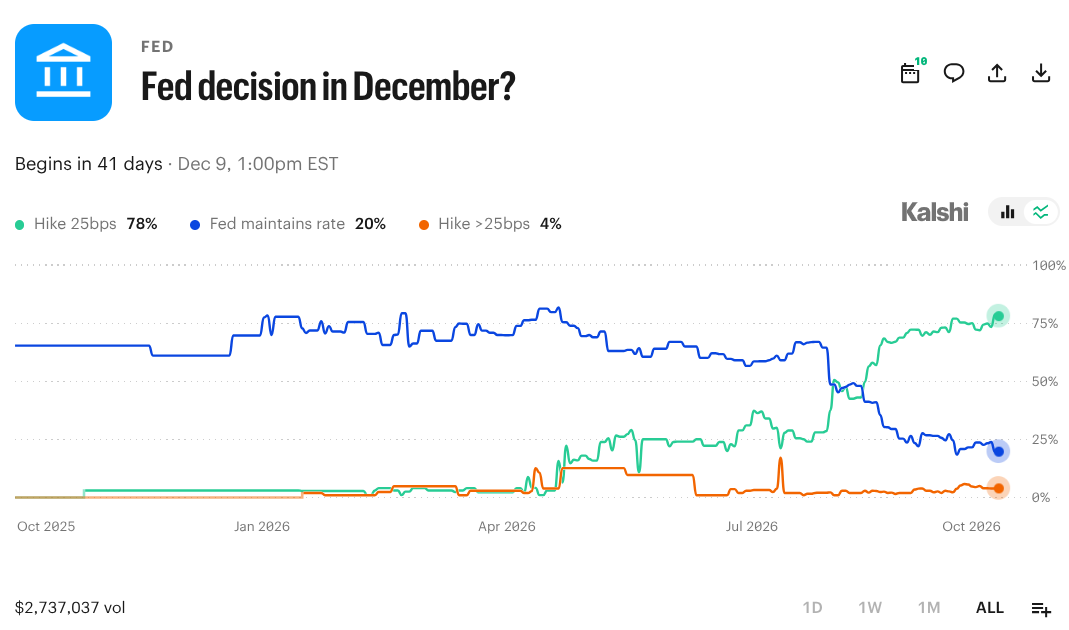
Kalshi's December Fed decision market places a quarter-point hike well ahead of every alternative. The 78% price marks a substantial shift from earlier in the year, when holding rates steady was the leading outcome. Several developments help explain the changing expectations:
- October's pause: The Fed held rates at 3.75%-4.00% on October 28, following September's quarter-point hike. The decision interrupted the tightening cycle without signaling that the inflation fight was finished.
- Two dissenting votes: Fed Governor Lisa Cook and Cleveland Fed President Beth Hammack favored another 25-basis-point increase in October, underscoring disagreement over whether policymakers should continue tightening.
- Persistent inflation: Inflation remains above the Fed's 2% objective, keeping pressure on policymakers to balance price stability against the economic costs of higher borrowing rates.
- Resilient economic activity: The Fed upgraded its assessment of growth from solid to strong in October, suggesting the economy has continued expanding despite higher borrowing costs.
- December's data window: Additional inflation, employment, and economic activity reports will arrive before the December 8-9 meeting, potentially shifting expectations in either direction.
The tension is straightforward: policymakers have just voted to wait, while traders are pricing another increase as the leading December outcome. Whether that gap persists will depend heavily on what the next round of economic data reveals.
Where Will Interest Rates Stand After December's Fed Meeting?
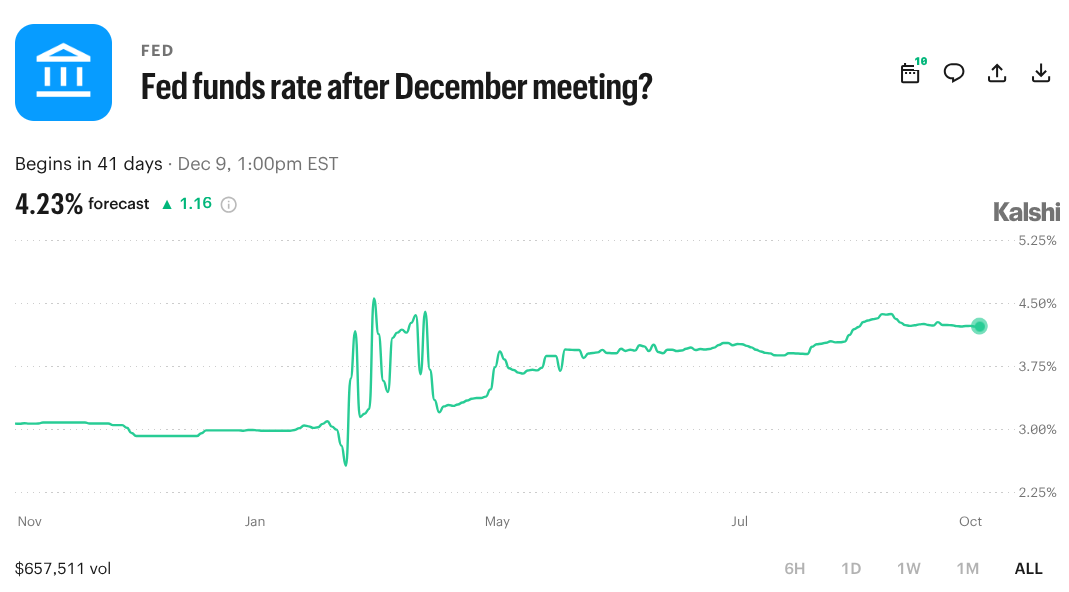
Kalshi's separate December federal funds rate market focuses on the rate level after the meeting rather than the size of the Fed's next move. Its displayed forecast is 4.23%, while individual threshold contracts provide a closer look at the expected range:
- Above 3.75% - 99%: Traders place a near-certain price on rates exceeding this threshold after December's meeting.
- Above 4.00% - 82%: This is where the market's expectations become especially concentrated, with traders strongly pricing a move beyond the current rate level while showing little appetite for substantially higher rates.
- Above 4.25% - 3%: Pricing drops sharply above this level, reinforcing the market's focus on a standard quarter-point increase rather than a larger move.
The forecast and threshold prices offer a useful cross-check on the headline decision market. Both concentrate expectations around a modest increase, rather than an aggressive acceleration in rate hikes.
Where Will the Fed Funds Rate Stand at the End of 2027?
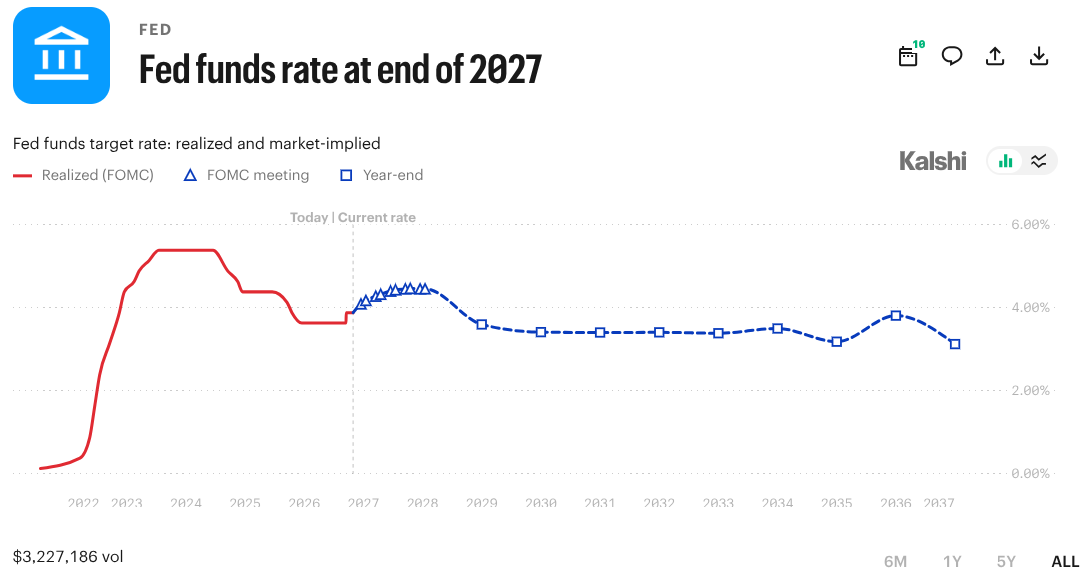
Kalshi's year-end 2027 federal funds rate market extends the outlook beyond December's immediate decision. The contracts measure whether rates finish 2027 above specific thresholds, offering a broader view of expectations for monetary policy over the following year:
- Above 4.00% - 86%: Traders are pricing considerable persistence in elevated rates, suggesting expectations that the Fed will have limited room to ease monetary policy over the next 14 months.
- Above 4.25% - 54%: This is the key dividing line. Pricing is nearly balanced on whether rates finish 2027 above this threshold, highlighting uncertainty over how much additional tightening might endure.
- Above 4.50% - 35%: A more restrictive rate environment remains in play, but the lower price suggests traders are less convinced that the Fed will need to sustain substantially higher rates through 2027.
The wider range reflects uncertainty about how inflation, employment, and economic growth will evolve across multiple Fed meetings. December may establish the next step, but the economic conditions that follow will shape whether policymakers continue tightening, hold steady, or eventually reverse course.
What to Watch Before the Fed's December Decision
The Fed's October pause has shifted attention toward the economic reports and policy signals that could influence its final scheduled decision of 2026. These developments deserve particular attention:
- Inflation: Upcoming price data will help determine whether inflation is easing toward the Fed's 2% target or remaining stubbornly elevated, a central consideration for further rate increases.
- Employment and growth: Labor-market conditions, consumer spending, and broader economic activity will help policymakers assess how much additional tightening the economy can absorb.
- Midterm elections: The November 3 results could reshape expectations for fiscal policy, government spending, and the broader economic outlook. While the election won't directly determine the Fed's December decision, its aftermath could influence market sentiment about inflation and interest rates.
- Fed communications: Speeches and public remarks from committee members could offer clues about whether October's two dissenting votes reflect a broader appetite for another hike.
For now, Kalshi traders are pricing December as a likely return to tightening, while the longer-term market leaves considerably more room for different outcomes. The question is whether incoming economic data will strengthen that conviction or expose the limits of the Fed's appetite for further rate hikes.